· By Aryan Ahmed
Quick answer: In 2026, the global chatbot market is expected to reach $11.8 billion, driven by increasing adoption across various sectors including e-commerce, healthcare, and finance. Approximately 987 million people globally engage with chatbots, which enhance customer service and streamline processes.
- The chatbot market is projected to grow significantly through 2030.
- Consumer expectations and preferences for chatbots are evolving quickly.
- Industries such as e-commerce and healthcare lead in chatbot adoption rates.
- Chatbots offer notable ROI and cost-saving opportunities for businesses.
- Expect significant advancements in AI and voice capabilities by 2027.
What Are the Key Categories of Chatbot Statistics?
These 250 statistics encompass a wide range of data crucial for understanding the impact of chatbots as we move into 2026. They include market growth projections, user adoption rates, customer service effectiveness, ROI for businesses deploying chatbot solutions, and various consumer preferences. As chatbots transition from experimental tools to key operational components, the growing landscape showcases their increased importance across multiple industries, indicating a robust market trajectory ahead.
What Is the Current Market Size and Growth Rate?
- The global chatbot market was estimated at $7.76 billion in 2024 and is projected to grow to $11.8 billion in 2026. By 2030, the market could reach $27.29 billion, reflecting a 23.3% CAGR.
- According to Mordor Intelligence, the chatbot market is expected to reach $11.45 billion in 2026 and grow to $32.45 billion by 2031, indicating a compound annual growth rate (CAGR) of 23.15%.
- The chatbot market could reach $61.97 billion by 2035, as projected by Roots Analysis.
- Fortune Business Insights anticipates a significant rise in the generative AI chatbot market, from $7.66 billion in 2024 to $65.94 billion by 2032, reflecting a CAGR of 31.1%.
- North America accounted for 38.72% of the global chatbot market in 2025, amounting to approximately $3.6 billion.
- The Asia-Pacific region is the fastest-growing market, with a projected CAGR of 24.71% through 2031.
- Expectations indicate that customer service will continue to lead, driving around 62% of chatbot market revenue.
- The sales and marketing sectors also show promising signs, with approximately 41% of chatbot deployments within these industries.
How Are Chatbots Being Adopted and Used?
- Datareportal estimates over 1.5 billion people globally are currently using chatbots.
- Research by Ipsos indicates that 68% of consumers have engaged with customer-service chatbots at least once.
- According to Statista, customer interactions via chatbots are most common for scheduling appointments (≈50%), placing orders (47%), and reporting issues (46%).
- A staggering 82% of customers prefer using a chatbot over waiting for human assistance.
- Approximately 27% of consumers use chatbots for purchases on a daily basis, with 34% using it several times a week.
- Studies show that 96% of consumers feel that companies deploying chatbots are more attentive to customer needs.
- Trust in chatbots is high, with 64% of respondents stating that they believe chatbots can assist effectively in their decision-making process.
- Notably, around 90% of chatbot inquiries are resolved within 11 messages.
- WytLabs determined that about 987 million individuals interact with AI chatbots on a regular basis.
- Roughly 88% of individuals report having at least one conversation with a chatbot in the last year.
What Are the Hidden Benefits of Chatbots?
Adopting chatbots can transform your customer interaction strategies in ways that may not be immediately apparent. For example, chatbots not only save time but can also dramatically reduce costs. Businesses report that using chatbots can lower operational expenses by approximately 30-40%. This is particularly appealing to small and mid-sized enterprises, which often work with tighter budgets. Additionally, chatbots can enhance lead conversion rates by 20-25%. For companies in high-volume sectors, such as retail, integrating chatbots can result in significant revenue boosts. Alongside cost reduction and improved sales, chatbots also enable round-the-clock support and can handle multiple customer inquiries simultaneously, vastly improving customer experience. This commitment to improved service can lend an air of reliability to your brand. As a result, many businesses note an increase in customer retention and overall satisfaction after deploying chatbot solutions.
How Do Chatbots Enhance Customer Service?
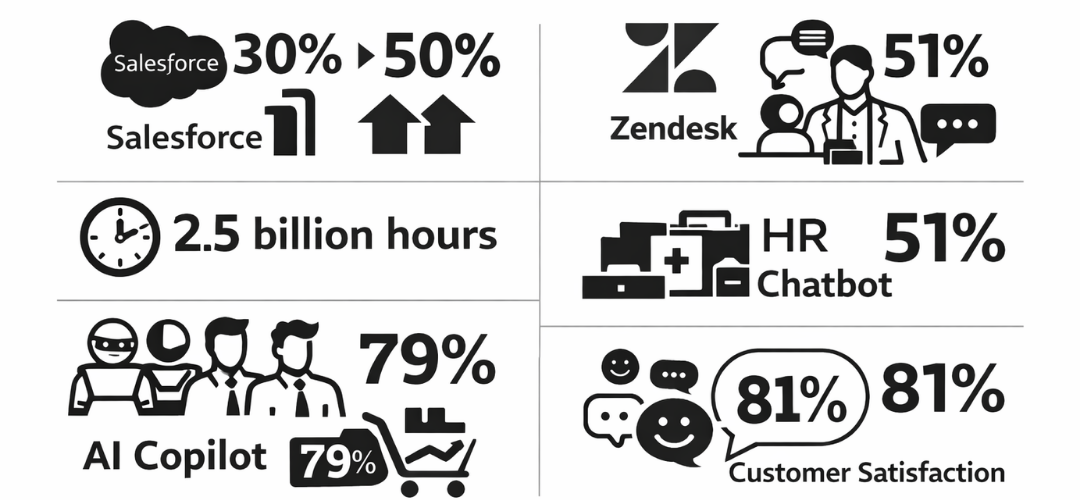
- Salesforce reports that as of 2025, AI chatbots resolved 30% of customer service cases, with expectations to handle 50% of cases by 2027.
- According to Gartner, chatbots excel at resolving 58% of return requests while only handling 17% of billing disputes effectively.
- Consumer preferences show that 51% of individuals prefer seeking immediate service through chatbots rather than awaiting human assistance.
- Despite the rise in chatbot usage, 84% of consumers still desire a human option when dealing with complex issues.
- Research by Juniper indicates that AI chatbots will save an estimated 2.5 billion hours of work annually across various sectors.
- A recent statistic predicts global consumer retail spending through chatbots could surge to $142 billion by 2024, showcasing the efficacy of chatbots in driving sales.
- Sales and marketing efforts using chatbots yield an average 67% sales lift, emphasizing their reliability in revenue generation.
Which Industries are Leading in Chatbot Adoption?
- Among chatbot-using businesses, 58% are classified as B2B, while 42% operate within B2C models.
- Industries adopting chatbots the most include real estate at 28%, travel and hospitality at 11%, education at 14%, and healthcare at 10%.
- The insurance sector’s chatbot market is projected to achieve a valuation of $4.5 billion by 2032.
- Current insights detail the automotive chatbot market growing from $60.48 billion in 2024 and reaching $247.1 billion by 2032.
- Conversational AI within the telecom sector remains modest, with only about 25% of consumers using telecom chatbots, yet growth is anticipated to hit $10 billion by 2028.
- Healthcare chatbot adoption could rise significantly, projected to reach about $431.47 million by 2028.
- Juniper forecasts that global retail spending via chatbots will increase from $12 billion in 2023 to $72 billion by 2028.
- Notably, chatbots in real estate are also reported to deliver a remarkable 420% ROI.
- In education, the 250% ROI showcases the effectiveness of deploying chatbots for streamlined services.
- Financial services companies deploying chatbots are estimated at 71%, with customer support being a primary focus in these deployments.
What Are the Current Trends in Chatbot Technology?
- Market data from Exploding Topics indicates that Meta AI has approximately 500 million users, while ChatGPT has around 400 million.
- Similarweb reports that ChatGPT commands 68% of generative AI web traffic but has seen a decline from 87.2%.
- Competitive platforms such as Gemini have increased their market share significantly from 5.4% to 18.2%.
- Chatbot developers report that 89% of platforms now support multi-channel experiences to improve user interactions.
- Generative AI traffic shows robust growth, nearing 1.1 billion referral visits in a single month prior to June 2025.
- AI chatbots can autonomously address up to 80% of customer support inquiries, enhancing operational efficiencies across industries.
- Chatbots are integrating increasingly with various businesses, including 76% who have linked them with CRMs and e-commerce platforms.
- Custom integration projects typically require just about 45 days to implement fully, showcasing the rapid deployment capabilities of modern chatbot solutions.
- Chatbot integration across customer support systems has a projected 99.9% reliability on APIs.
- Many platforms expect that by 2026, voice-enabled chatbots will account for around 78% of deployments.
What Are Consumer Preferences and Behavior Towards Chatbots?
- Research indicates that 87% of users have a neutral or positive perspective on chatbot interactions, highlighting broad acceptance.
- About 62% of consumers prefer using digital assistants for quick inquiries, while only 7% express dissatisfaction.
- Expectations from customers suggest that 90% of queries can be resolved within a maximum of 10 interactions with chatbots.
- Gen Z shows a clear preference for AI chatbots, with 89% indicating a higher comfort level compared to older generations.
- During daily transactions, 78% of consumers will choose chatbots for simple tasks if available.
- In peak usage times, interactions rise significantly, particularly between 8 p.m. and 11 p.m., with sessions averaging approximately 4.2 minutes.
- Research confirms that chatbots influence purchasing decisions significantly, with 60% of consumers acknowledging their impact.
- Customer return rates to chatbots are notable, with 67% stating they return for repeat interactions.
- Quick response times are essential, as 69% of consumers expect replies within 5 seconds.
- Businesses leveraging chatbots report a 75% increase in customer satisfaction following deployment.
What Future Trends Should We Anticipate?
- Gartner predicts that by 2027, chatbots will become the main customer service channel for 25% of organizations.
- Current data from Salesforce suggests that 30% of support cases are handled through AI, paving the way to meet future expectations.
- According to forecasts, chatbots will likely maintain CAGRs above 23% through 2030, highlighting sustained growth.
- Rapid increases in generative AI platform usage show a 76% rise in visits and a substantial 319% jump in app downloads year over year.
- McKinsey estimates that AI will manage around 80% of customer interactions, while humans will only need to involve themselves in the remaining 20%.
- Investment in AI technologies is expected to rise significantly, as 61% of companies plan increased funding for AI initiatives over the next year.
- Automation opportunities could save organizations around $80 billion in agent labor costs by the end of 2026.
- Deloitte’s surveys show that shifting consumer perceptions are leaning towards greater reliance on AI for customer interactions.
- Juniper projects significant savings from deployments, estimating a cut of $11 billion annually from support costs.
- As chatbot technology becomes more integrated, expect an increase in new AI-focused roles within companies to ensure successful implementations.
Which One Fits You?
Different businesses adopt chatbots to fulfill varied needs based on their industry, size, and goals. Understanding which chatbot solution fits you can enhance your operational effectiveness. Below are three reader profiles with recommendations on chatbot options:
- Small Business Owner: If you run a small business and need to engage customers without significant investment, a basic chatbot builder like Tidio or Landbot can be perfect. These platforms offer user-friendly interfaces, allowing you to create chatbots without coding experience for a low monthly fee.
- Mid-sized Retailer: For mid-sized retailers who require advanced features, consider platforms like Intercom or Drift. These services provide AI-driven solutions with robust analytics, capability for integrating with e-commerce platforms, and improving customer interaction processes.
- Large Enterprise: Larger corporations might prefer comprehensive solutions such as IBM Watson or Salesforce Service Cloud. These platforms offer customizable chatbot solutions with deep learning capabilities to improve customer experiences over time.
How to Set Up a Chatbot: Step-by-Step Guide
Setting up a chatbot can seem daunting, but by following a structured step-by-step process, you can implement it effectively and efficiently. Here’s a concise guide:
- Define Your Objectives: Determine the primary functions your chatbot will serve, such as customer inquiries, sales assistance, or appointment scheduling.
- Select a Platform: Choose a chatbot development platform that best meets your needs, such as Google Dialogflow or Microsoft Azure Bot Service.
- Design Conversation Flows: Outline how the chatbot will respond to various user inputs. Make use of sample scripts to guide the development of conversation pathways.
- Implement the Chatbot: Integrate your chatbot with your website or messaging platforms like Facebook Messenger and Slack.
- Test and Optimize: Launch the chatbot in a controlled environment, gather feedback, and monitor its performance. Continuously optimize the chatbot’s responses based on user interactions.
By following these steps, you can create a chatbot that effectively meets your business needs and provides your customers with a seamless experience.
Pricing Breakdown: Chatbot Solutions
Understanding the various pricing structures available for chatbot solutions can help businesses make informed decisions. Below is a breakdown of pricing scenarios for different business environments:
| Chatbot Solution | Monthly Cost | Best For | Key Features |
|---|---|---|---|
| Tidio | $18 | Small Businesses | User-friendly setup, basic analytics, email marketing integration |
| Intercom | $87 | Mid-sized Businesses | AI assistance, detailed analytics, CRM integration |
| IBM Watson | Varies (starting at $140) | Large Enterprises | Custom AI solutions, extensive analytics, scalability options |
For small businesses, Tidio offers an accessible entry point to chatbots with essential features. Mid-sized retailers can benefit from the comprehensive services of Intercom, while larger corporations may find that IBM Watson’s customizable infrastructure meets their extensive needs. By evaluating your business requirements, you can choose a solution that aligns with your growth trajectory and budget.
Pros and Cons of Chatbots
| Pros | Cons |
|---|---|
| 24/7 availability enhances customer engagement. | Can struggle with complex queries requiring nuanced understanding. |
| Reduces operational costs significantly. | Requires regular updates and maintenance for optimal performance. |
| Improves response time and customer satisfaction. | May lead to frustration if the handoff to a human agent is not managed correctly. |
| Scalable solution for high-volumes of inquiries. | Initial setup and integration efforts might be time-consuming. |
The advantages of chatbots include their availability, cost-efficiency, and ability to enhance customer satisfaction through quicker responses. However, potential downsides include their struggle with complex inquiries and the need for regular maintenance. It is essential to weigh these factors when considering chatbot implementation for your organization.
Common Mistakes and How to Avoid Them
When deploying chatbots, businesses often make mistakes that can hinder their effectiveness. Here are some common pitfalls and strategies for avoiding them:
- Overcomplicating Conversations: Ensure that your chatbot has clear and concise scripts to guide interactions. A bot overwhelmed with excessive branches may confuse users.
- Neglecting User Experience: Always prioritize customer comfort. Testing the bot’s responses with actual users can provide insights on enhancing user experience.
- Insufficient Training: Invest in training your chatbot with diverse queries to better understand user intent. Continuous learning is essential for improving its effectiveness over time.
- Ignoring Analytics: Regularly monitor and analyze chatbot performance data to refine scripts, address shortcomings, and identify areas for optimization.
Avoiding these common mistakes can lead to a smoother chatbot implementation and improved user experiences.
Decision Checklist for Chatbot Implementation
Before implementing a chatbot, businesses should consider the following checklist to ensure successful deployment:
- Identify Objectives: What specific user needs will the chatbot address?
- Choose the Right Platform: Which chatbot solution aligns with your technical requirements and budget?
- Design for Users: How intuitive and user-friendly is the chatbot’s conversation design?
- Integration Capabilities: How well can the chatbot connect with your existing systems and platforms?
- Training and Maintenance: What strategies will you employ for chatbot training and ongoing updates?
- Performance Metrics: How will you measure the chatbot’s success in meeting your objectives?
By addressing each of these points, businesses can maximize the benefits of their chatbots, creating a more effective customer engagement tool.