· By IMRAN HOSSAIN
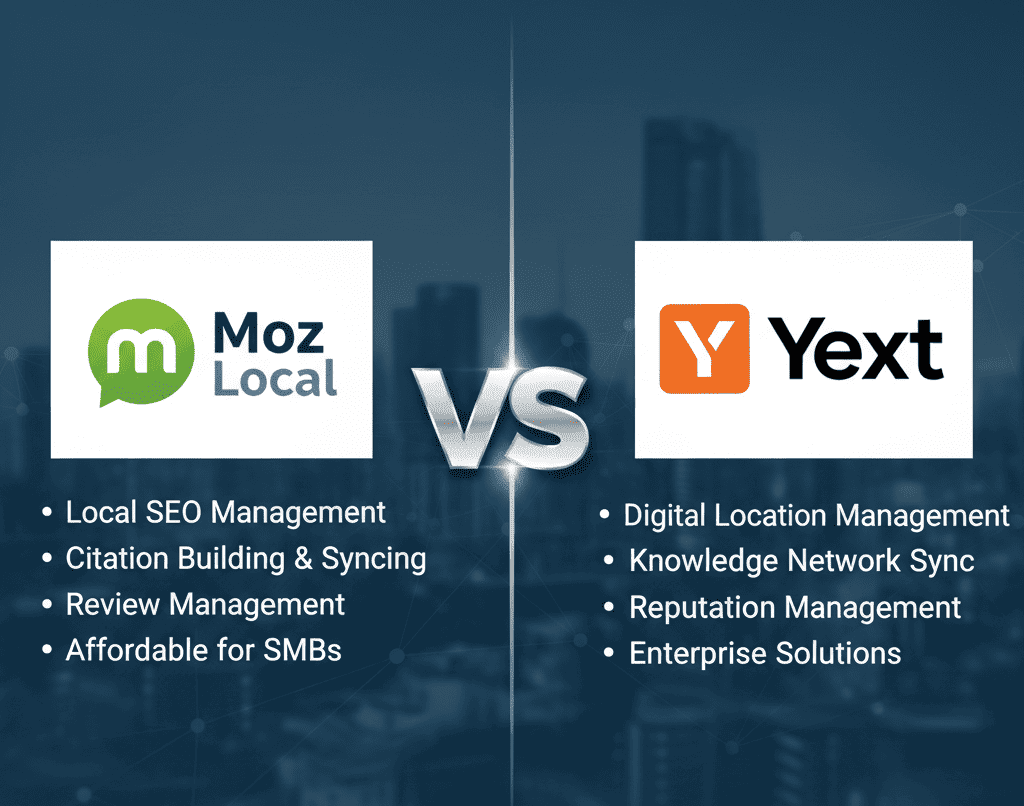
Quick answer: In 2026, Moz Local is ideal for smaller businesses looking for an affordable way to manage their local SEO, while Yext is better suited for large enterprises that require comprehensive control over their online presence.
- Moz Local offers a straightforward, budget-friendly solution for local businesses.
- Yext provides advanced features and integrations tailored for multi-location enterprises.
- Both tools help manage duplicate listings effectively.
- Yext excels in analytics and review management capabilities.
- Your choice should align with the size and needs of your business.
What is Moz Local?
Moz Local is an accessible local SEO tool that primarily targets small businesses and freelancers. Its notable feature is syncing essential business information to numerous local directories, enhancing visibility. With a straightforward dashboard, Moz Local simplifies citation management, allowing you to monitor and update your business information seamlessly. This tool is a vital component of the larger Moz SEO suite, which includes resources for keyword research, link building, and overall performance tracking. Small businesses can benefit greatly from its easy integration into existing marketing strategies, helping them establish a solid online presence without requiring extensive technical knowledge.
What is Yext?
Yext is a robust digital knowledge management platform designed for comprehensive control over a business’s public information. It allows companies to manage their location data across multiple platforms, including search engines, maps, apps, and voice assistants. Yext is particularly beneficial for multi-location brands, offering significant security and management capabilities over their online data. Its ability to push updates to various directories in real time ensures that the business’s information is always current, which is crucial for improving customer engagement and driving foot traffic. Furthermore, Yext’s analytics tools provide deep insights into how customers interact with the business across different channels, empowering brands to stay ahead in terms of visibility and reputation management.
How Much Does Each Tool Cost in 2026?
In 2026, Moz Local provides three pricing tiers, generally ranging from $20 to $40 per month per location, making it a cost-effective choice for small businesses and freelancers. For example, a small café managing one location would spend roughly $30 per month, whereas a clinic managing four locations would invest around $120 per month. Conversely, Yext operates on a custom, quote-based pricing model, with packages often starting at around $500 annually for basic services and reaching into the thousands for enterprises needing extensive features. This higher cost may reflect the advanced organization, management, and reporting capabilities that larger businesses require. Evaluating your business size and budget is vital when choosing between these two options, as the potential return on investment can vary significantly.
What are the Key Differences Between Moz Local and Yext?
One major difference between Moz Local and Yext lies in their target audience. Moz Local caters to small businesses with straightforward needs, focusing on easy citation management. In contrast, Yext is tailored for larger enterprises that demand extensive capabilities such as real-time data updates, deeper analytics, and advanced review management options. Yext also boasts a broader range of integrations with platforms like Google My Business and social media accounts, ensuring a comprehensive digital footprint. Meanwhile, Moz Local emphasizes simplicity and user-friendliness, making it accessible for those less familiar with SEO. These fundamental differences can dictate which tool is more suited for your business based on size, complexity, and ultimately, your marketing goals.
Which One Fits You? Reader Profiles
- Small Business Owner: If you run a small business and have a limited budget, choose Moz Local for its cost-effective plans and essential features. For example, a local florist can easily manage listings to attract nearby customers.
- Multi-Location Brand: For businesses with multiple locations, select Yext to leverage its advanced data management and security. A chain restaurant can greatly benefit from concise and uniform information across various platforms.
- Freelancer: If you are a freelancer needing a simple yet effective tool, Moz Local provides a user-friendly experience. A graphic designer can efficiently manage their listings without complex tools distracting from their primary work.
- Digital Marketing Agency: Agencies managing various clients may prefer Yext for its integration capabilities and extensive features. An agency handling multiple national brands can leverage Yext’s powerful tools to ensure optimal each client’s online presence.
Key Factors for Choosing Between Moz Local and Yext
Before you decide, consider the specific goals of your business. For example, if your primary focus is to boost local SEO rankings quickly, Moz Local’s straightforward approach may be ideal. On the other hand, if your business requires robust analytics to measure online performance across numerous platforms, Yext’s comprehensive toolset offers greater insights. Additionally, consider the scalability of each platform: small businesses may find they grow into Yext in the future, but starting with Moz Local might be a better financial decision to begin with. Be aware of hidden costs associated with each tool’s deployment and ongoing maintenance, as these can affect your overall budget and efficacy.
How Do They Handle Duplicate Listings?
Managing duplicate listings is critical for local SEO, and both Moz Local and Yext include features to identify and resolve these issues. They recognize duplicates across their networks, helping maintain your business’s credibility and consistency. For instance, if a barbershop has multiple profiles on different platforms due to erroneous data entry, these tools will spot and correct duplicates, significantly enhancing user experience. This function is essential in preventing confusion among customers and ensuring that they always have access to accurate business information when searching for your business or services. Regular updates and checks on listings can also further minimize discrepancies that might otherwise confuse customers.
Which Tool is Better for Review Management?
For review management, Yext generally outshines Moz Local by offering more sophisticated features, such as automated review generation and AI-driven responses. While Moz Local provides essential tools for responding to reviews and monitoring feedback, Yext’s advanced capabilities make it better for businesses focused on building and maintaining their online reputation. For instance, a dental clinic can utilize Yext’s features to solicit patient feedback post-appointment, instantly gathering insights and showcasing positive reviews online. This automated process helps streamline customer engagement and ensures timely responses to any negative reviews, thereby potentially salvaging customer relationships. In essence, if reviews are a critical aspect of your business strategy, Yext may be the more rounded choice.
Does Either Platform Offer a Free Version?
Neither Moz Local nor Yext offers a free version for their main services. However, Moz Local provides a free tool for checking your business’s listing accuracy and score, allowing users to assess their current visibility and identify areas for improvement. In contrast, Yext may offer a short free trial to test its features, enabling prospective customers to understand its robust platform before making any commitments. If you’re considering either tool, these options can help you gauge their effectiveness before committing to a paid plan, ultimately ensuring that you invest wisely based on actual performance feedback.
Common Mistakes and How to Avoid Them
When implementing local SEO tools like Moz Local or Yext, several common mistakes can hinder your efforts. A critical error is failing to keep business information consistent across all platforms, which can lead to customer confusion and negatively affect search engine rankings. To avoid this, ensure regular audits of your listings across various directories after using these tools. Additionally, neglecting to engage with customer reviews is another common pitfall. Many businesses focus solely on acquiring reviews without actively responding to them. Make it a policy to reply to feedback, fostering a connection with customers and improving your online reputation. Lastly, not utilizing the analytic features available can limit insights. Both tools offer metrics that can guide your SEO strategies; leverage these data-driven insights to maximize your local marketing efforts.
FAQs
- Which platform is more affordable?
- Which is better for a small business?
- Which is better for an enterprise business?
- How do they handle duplicate listings?
- Which one is better for review management?
- Which platform has more integrations?
Moz Local is more affordable for small businesses, offering plans starting low, while Yext is generally a premium service.
Moz Local is better for small businesses due to its cost-effectiveness and ease of use in managing essential listings.
Yext is superior for enterprises, providing extensive data management and control for multiple locations.
Both Moz Local and Yext manage duplicate listings by identifying and suppressing them across their networks.
Yext excels in review management, offering advanced features like automated response generation, while Moz Local has basic tools.
Yext provides a broader range of integrations with various platforms compared to Moz Local.
In conclusion, your choice between Moz Local and Yext should be guided by the specific needs of your business in 2026. Moz Local offers a straightforward and budget-friendly option for small to medium businesses, while Yext delivers extensive capabilities suited for larger enterprises with multifaceted requirements.