· By IMRAN HOSSAIN
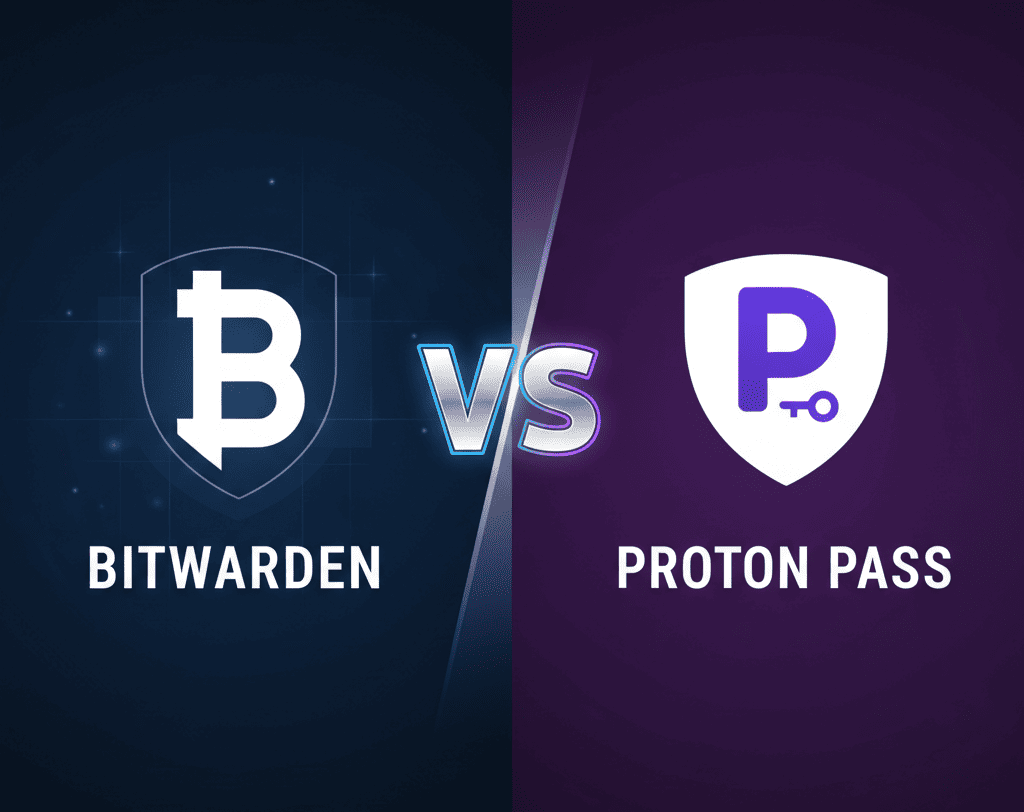
Quick answer: Choosing between Bitwarden and Proton Pass in 2026 comes down to your specific needs. Bitwarden offers superior features for flexibility and business use, while Proton Pass shines in privacy and simplicity. Your choice depends on whether you prioritize advanced functionalities or a user-friendly experience.
- Bitwarden is a leading open-source password manager with extensive features.
- Proton Pass is aligned with privacy, benefiting from the Proton ecosystem.
- Bitwarden’s free plan is more robust than Proton Pass’s.
- Proton Pass is great for beginners due to its straightforward interface.
- Your choice depends on family versus business needs and user experience preferences.
What is Bitwarden?
Bitwarden is a comprehensive and trustworthy open-source password manager designed for individuals and teams. It emphasizes security through strong encryption and transparency, allowing users to review its code. The platform caters to a diverse audience with its flexible features, making it suitable for both personal users and enterprises who want to manage sensitive information securely.
Bitwarden provides an affordable solution with its generous free plan, including an extensive range of features, such as secure password sharing and two-factor authentication. Additionally, users can self-host their password vault, which enhances control over their data. Such flexibility attracts tech-savvy users looking for a customizable password management experience.
What is Proton Pass?
Proton Pass is an intuitive password manager from the developers of Proton Mail, designed to seamlessly integrate with their suite of privacy-focused services. It offers strong security features, including end-to-end encryption and unique email aliases, enhancing protection against identity theft. Users appreciate Proton Pass for its user-friendly interface, ensuring that even those new to password managers can navigate its features with ease.
This password manager is part of the broader Proton ecosystem, which emphasizes privacy and security. Proton Pass is particularly suitable for users who prioritize simplicity and a holistic security solution, combining email management and password storage in one platform. The service is appealing to those seeking enhanced privacy without compromising performance and usability.
Which one fits you better?
When deciding between Bitwarden and Proton Pass, it’s essential to consider your profile and specific needs. Here are a few scenarios to help guide your choice:
- Individuals on a Budget: If you’re looking for the most features at the lowest cost, choose Bitwarden for its extensive free plan.
- Small Teams: For small businesses or teams that need sharing functionality, Bitwarden also offers a better selection of tools.
- Privacy-Conscious Users: If anonymity and privacy are your top priorities, Proton Pass excels over Bitwarden.
- Frequent Travelers: For users traveling internationally, Proton Pass’s Swiss privacy laws might provide an additional comfort regarding data security.
How do Bitwarden and Proton Pass compare on pricing in 2026?
In 2026, Bitwarden’s pricing structure is highly competitive, offering a free plan that includes core features many other password managers reserve for paying users. The premium personal plan costs $10 per year, making it budget-friendly. In contrast, Proton Pass offers a free plan but its premium features come at a price point significantly higher than Bitwarden’s, starting at around $49.99 annually.
For families, Bitwarden offers a Family plan for $40 per year, which allows up to six members to share a vault, while Proton Pass’s family plan is priced higher. If you require extensive functionalities, the overall cost differential should be a key consideration in your choice.
Which platform is better for family use?
Bitwarden is the superior choice for family use. The Family plan is not only cost-effective but also permits easy sharing of passwords among family members. This capability ensures that families can maintain shared access to important accounts without compromising security.
On the other hand, Proton Pass lacks the same level of sharing features. While it does allow password sharing, its approach is more restrictive, making Bitwarden the preferred password manager for a family setup. Users seeking flexibility and shared access would benefit more from Bitwarden’s offerings.
How secure are Bitwarden and Proton Pass?
Both Bitwarden and Proton Pass uphold a high standard of security through zero-knowledge architecture, meaning neither service can access users’ plaintext passwords. However, Bitwarden’s status as a fully open-source project enhances transparency, allowing anyone to inspect its code for vulnerabilities or weaknesses.
Proton Pass has a strong privacy foundation as well; however, it doesn’t provide the same level of external code audit opportunities since its entire ecosystem is not fully open-source. If total transparency is a crucial requirement for you, Bitwarden might be the more reassuring option.
Which platform is easier to use for beginners?
When it comes to ease of use, Proton Pass typically wins out due to its straightforward setup and clear interface. Beginners find the clean dashboard and user-centric features, such as email alias creation, make password management a breeze. Proton Pass enables users to quickly grasp how to manage their passwords securely.
Bitwarden, while also user-friendly, offers a more complex suite of features which might overwhelm new users before they fully get accustomed to the platform. For those who want a simple introduction to password management, Proton Pass stands out as the more approachable option.
What special features do Bitwarden and Proton Pass offer?
Both Bitwarden and Proton Pass boast unique features tailored to their respective audiences. Proton Pass offers an email alias service that enhances privacy by allowing users to generate random emails for account creation without revealing their actual email address. This is useful for protecting personal data during sign-ups or online transactions.
In contrast, Bitwarden includes self-hosting capabilities that allow tech-savvy users to run their password manager on their own server. Additionally, Bitwarden features extensive security reports, such as password health score and breach alerts which cater well to users who prefer detailed security insights. Depending on how much you value privacy versus in-depth analytics, you might prefer one over the other.
Uncovering Hidden Costs and Trade-offs
When weighing options between Bitwarden and Proton Pass, understanding hidden costs is vital for making an informed decision. For instance, while Proton Pass has higher initial pricing, users need to assess if its features justify the cost. Many may overlook that while Bitwarden is generally more affordable, advanced features such as self-hosting require technical knowledge and possibly additional IT costs.
Additionally, while Proton Pass’s bundled offerings may seem appealing, the scope of features may not meet the needs of all users, potentially leading to extraneous expenses. For users on a budget, especially those who do not want to self-host, Bitwarden provides a more compelling value proposition throughout 2026.
Common mistakes when choosing a password manager
When selecting between Bitwarden and Proton Pass, users often make several common mistakes. Firstly, many may underestimate the importance of understanding the specific functionalities necessary for their needs. For instance, a user who requires dual-entry verification may overlook that not all plans have this feature.
Another mistake is focusing solely on price without considering the overall value. Some users assume Proton Pass’s higher cost equates to better features without thoroughly examining Bitwarden’s offerings. Always evaluate which features are critical to you before making a decision to avoid unnecessary expenditure.
FAQs
- Which platform is more affordable?
Bitwarden is more affordable, offering a generous free plan compared to Proton Pass’s pricing. - Which one is better for a family?
Bitwarden is ideal for families due to its flexible sharing options and lower family plan costs. - Which one is better for a business?
Bitwarden excels for businesses, offering robust enterprise features like SSO and directory integration. - How do their security models compare?
Both utilize zero-knowledge architecture, but Bitwarden’s complete open-source model allows for extensive code audits. - Which one is easier to use?
Proton Pass tends to be easier for beginners, with a straightforward interface and features like email aliases. - Which platform offers more extra features?
Proton Pass has a wider array of features, but Bitwarden’s self-hosting and CLI tools cater well to advanced users.
In conclusion, Bitwarden is better for those who prioritize flexibility, enterprise features, and a robust free plan. Proton Pass excels for those who prioritize privacy and ease of use. Which you select should align with your needs, whether you value advanced functionalities or a simplified password management experience.